Salon Nayana guide · Reviewed August 2026
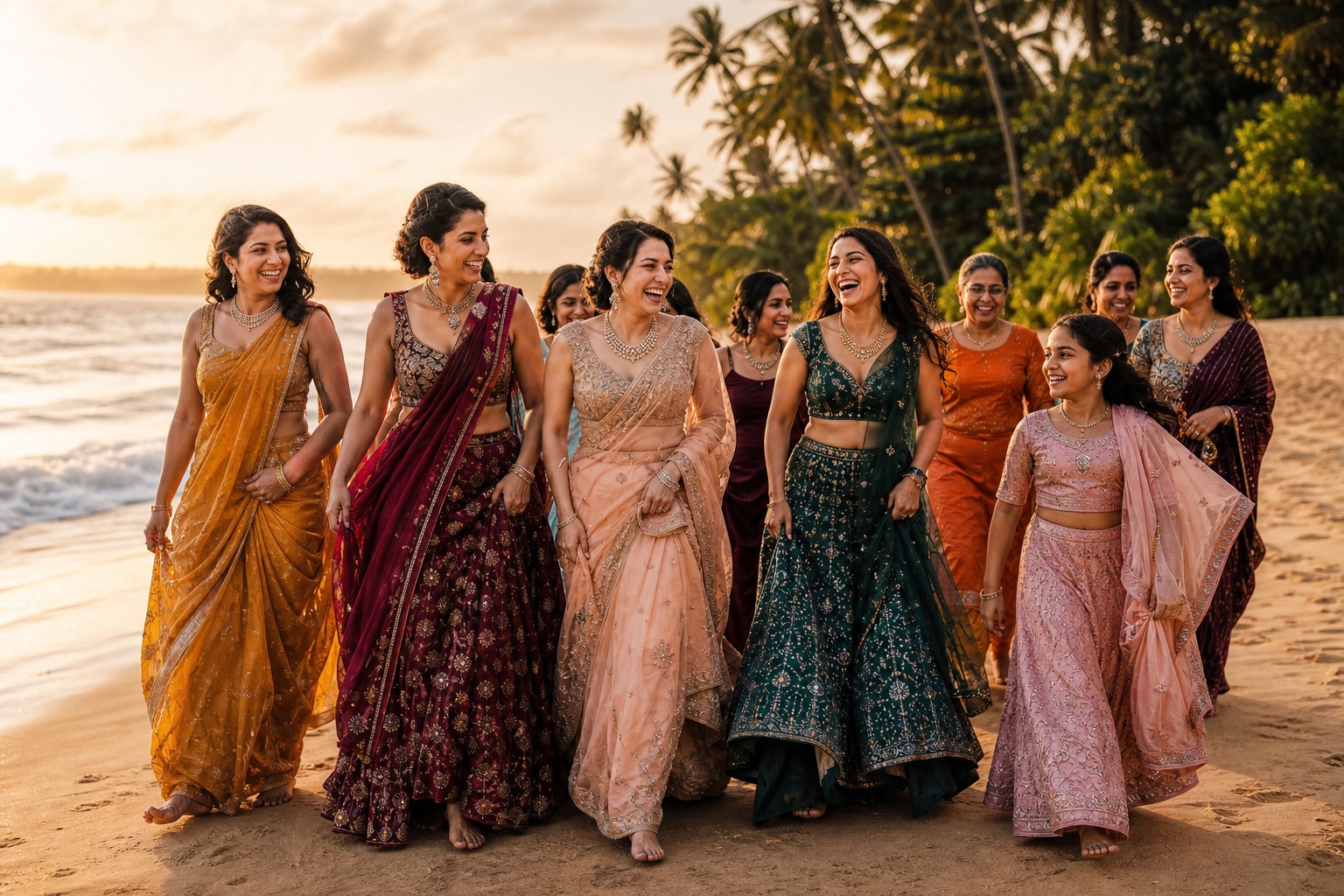
Bridesmaids should look connected without losing their individuality. A good group brief defines the palette, finish and timing while leaving room for the people wearing the looks.
Create a visual direction, not a uniform
Share the outfits, wedding palette and desired level of formality. Then record individual preferences such as hair up or down, make-up comfort, glasses, skin sensitivities and jewellery placement.
Separate the bride’s timeline
The bride may need quieter space, a trial-led look and more time for jewellery and dressing. Bridesmaid services can be coordinated nearby without allowing group questions or room traffic to interrupt the bridal plan.
Assign waves by responsibility
A bridesmaid needed for detail photographs, family support or ceremony setup may require an earlier finish. Others can prepare later. Use responsibilities and portrait times, not friendship order, to build the schedule.
Confirm every service before travel
Ask each bridesmaid to confirm hair, make-up, saree or dupatta support and any event change. A yes-or-no service list is more useful than a single headcount and reduces last-minute additions in the suite.
A few things families ask
Helpful answers for later
Do all bridesmaids need the same hairstyle?
No. A shared mood, finish or accessory can create cohesion while respecting different hair and outfits.
Can bridesmaids and family share the same beauty room?
They can if the room, stations and guest flow support it. Protect a quieter zone for the bride where possible.
How should we count bridesmaid services?
List hair, make-up and dressing separately for each person and event, including any outfit change.
Tell us about the celebration you are imagining.
A date, destination and rough idea of the group is enough to begin. We can talk through the details together later.
Start a conversationReturn to the wedding experience